
 |


WP
HRH
HRH0013
| Quantity: | |
|---|---|
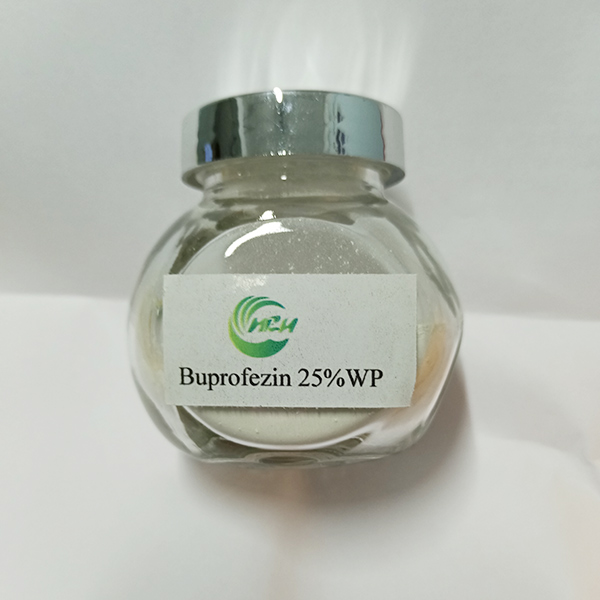
Common Name: Buprofezin
Chemical Name: 2-tert-butylimino-3-isopropyl-5-phenylperhydro-1,3,5-thiadiazin-4-one
Formulation: 25% Wettable Powder (25% WP)
CAS No.: 69327-76-0
Physicochemical Properties: Melting point 104.5~105.5℃, Vapor pressure 1.25×10⁻³Pa (25℃), Relative density 1.18
Inhibits insect chitin synthesis and interferes with metabolism
Causes nymphs to die slowly due to malformation or wing deformation during molting
Highly toxic to nymphs; for adults, it mainlyshortens lifespan and reduces fecundity, and most of the laid eggs are infertile
High Selectivity: Highly effective mainly against Hemiptera pests (e.g., planthoppers, whiteflies, scale insects)
Long Duration of Efficacy: Up to 30 days or more
Low Toxicity: Safe to beneficial organisms, suitable for Integrated Pest Management (IPM)
Dual Action: Contact and stomach toxicity
Rice: Planthoppers (Brown planthopper, White-backed planthopper)
Fruit Trees: Citrus arrowhead scale, Black citrus aphid, Scale insects
Vegetables: Whiteflies, Aphids
Tea Plants: Small green leafhoppers
Crop | Pest to Control | Dosage | Application Method |
Rice | Planthoppers | 20-30 grams per mu (1 mu ≈ 0.0667 hectares) | Dilute with water and spray on the middle and lower parts of rice plants |
Citrus Trees | Arrowhead Scale | 1000-1250 times dilution | Uniform spraying |
Fruit Trees | Scale Insects | 1500-2000 times dilution | Uniform spraying |
Vegetables | Whiteflies | 1500 times dilution | Focus on spraying the back of leaves |
Rice: Peak period of egg hatching to peak period of young nymphs
Depending on pest infestation, apply every 7 days or so, with a maximum of 2 consecutive applications
Pre-harvest Interval (PHI): 7 days for rice, 14 days for citrus
Donot apply on windy days or when rain is expected within 1 hour
Wear protective equipment during use to avoid skin contact and inhalation through mouth and nose
Apply away from aquaculture areas, ponds and other water bodies to avoid water pollution
Do not mix with alkaline pesticides
Rotate or mix with insecticides of different modes of action (e.g., Imidacloprid, Bifenthrin)
Strictly use according to the recommended dosage; avoid frequent use at low dosages