
 |


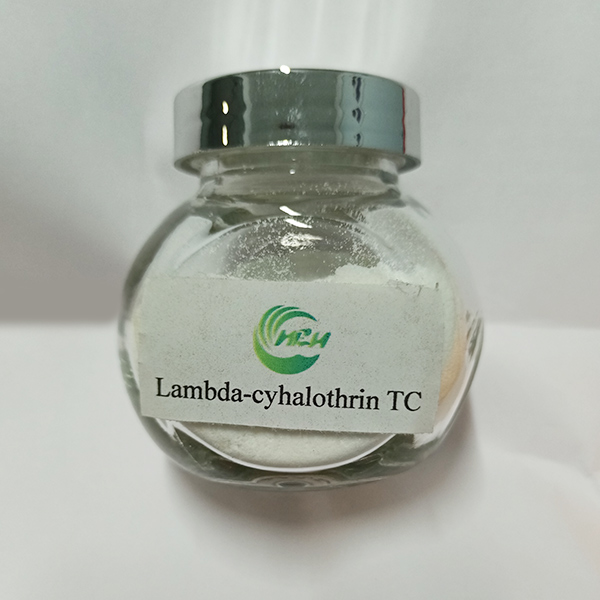
Lambda-cyhalothrin: High-efficiency, broad-spectrum, quick-acting pyrethroid insecticides and acaricides, mainly contact and stomach toxicity, no systemic effect.
It has a good effect on Lepidoptera, Coleoptera and Hemiptera and other pests and other pests, as well as spider mites, rust mites, gall mites, tarsid mites, etc. It can treat both insects and mites concurrently, and can prevent cotton red Bollworms and cotton bollworms, cabbage caterpillars, pipe aphid, tea looper, tea caterpillars, tea orange gall mites, leaf gall mites, citrus leaf moths, orange aphid and citrus spider mites, rust mites, peach heartworm and pear heartworm, etc., It can also be used to control a variety of surface and public health pests.
Used in wheat, corn, fruit trees, cotton, cruciferous vegetables, etc. to control malt, midge, armyworm, corn borer, beet armyworm, heartworm, leaf roller, leaf miner, swallowtail butterfly, fruit sucker, cotton bollworm, red Instar insects, cabbage caterpillars, etc., used in grassland, grassland, dry field crops to control grass borers, etc.
TC
HRH0009
| Quantity: | |
|---|---|
Basic Information
Chinese Name: Lambda-cyhalothrin
English Name: Lambda-cyhalothrin
CAS No.: 91465-08-6
Molecular Formula: C₂₃H₁₉ClF₃NO₃
Chemical Name: α-cyano-3-phenoxybenzyl-3-(2-chloro-3,3,3-trifluoropropenyl)-2,2-dimethylcyclopropanecarboxylate
Structural Formula: [1:1 mixture of Z-(1R,3R),S-ester and Z-(1S,3S),R-ester]
Technical Indicators (per GB/T 20695-2021 Standard)
Parameter | Index Requirement |
Active Ingredient Content | ≥96.0% (HPLC) |
Moisture Content | ≤0.1% |
Acidity (as H₂SO₄) | ≤0.1% |
Acetone-insoluble Matter | ≤0.3% |
Physicochemical Properties
• Appearance: Yellow to brown viscous oily liquid
• Boiling Point: 187-190℃/0.2mmHg
• Melting Point: 49.2℃
• Density: 1.25 (25℃)
• Vapor Pressure: Approximately 0.001mPa (20℃)
• Solubility: Extremely low solubility in water (0.004ppb/20℃); readily soluble in organic solvents such as acetone, dichloromethane, methanol, ether, and ethyl acetate
• Stability: Stable for 2 years when stored in darkness at 50℃, and stable under light; decomposes at 275℃; decomposes slowly in pH 7-9 environment, with accelerated decomposition when pH>9
Mechanism of Action and Characteristics
Mode of Action: Mainly contact and stomach poisoning, with certain repellent effects; no systemic activity
Insecticidal Mechanism: As a neurotoxin, it specifically acts on sodium channels in the neuronal membranes of insect nervous systems, inhibiting channel closure, leading to continuous nerve excitation, and ultimately causing pest paralysis and death
Product Characteristics:
• High Efficiency and Broad Spectrum: Excellent control effect against various pests such as Lepidoptera, Coleoptera, Hemiptera, as well as mites like spider mites and rust mites
• Rapid Knockdown: Pests stop feeding quickly after application, reducing damage
• Long Residual Effect: Long-lasting efficacy reduces the frequency of pesticide application
• Rainfastness: Not easily washed away by rain after application, ensuring efficacy
• Easy Biodegradation: No toxic residues after degradation, environmentally friendly
Toxicity and Safety Information
• Acute Toxicity: LD₅₀ (oral, rat): 79mg/kg (male), 56mg/kg (female); LD₅₀ (dermal, rat): 632mg/kg (male), 696mg/kg (female)
• Hazard Class: T+ (Very Toxic); irritating to eyes and skin
• Environmental Impact: Highly toxic to fish, bees, silkworms, and earthworms, with certain impacts on the ecological environment
• Acceptable Daily Intake (ADI): Determined by the Joint FAO/WHO Meeting on Pesticide Residues (JMPR) as 0-0.02mg/kg body weight/day
Application Fields
Agricultural Field:
• Pest control for vegetable crops (cabbage, Chinese cabbage, cucumber, tomato, chili, etc.)
• Pest and disease management for fruit trees (apple, citrus, litchi, pear, etc.)
• Pest control for cash crops such as cotton, tobacco, and tea trees
• Pest prevention and control for field crops (wheat, corn, etc.)
Hygiene Field:
• Control of sanitary pests such as mosquitoes and flies in households and public places
• Pest control in livestock breeding sites
Formulation Types
Technical material (Lambda-cyhalothrin TC) is usually processed into the following formulations for use:
• Emulsifiable Concentrate (EC): 2.5%, 5%, 10%, 25%, 50%, etc.
• Emulsion in Water (EW): 2.5%, 5%, etc.
• Wettable Powder (WP): 10%, etc.
Precautions for Use
1. Protective Measures: Wear protective clothing, gloves, and masks during application to avoid skin contact and inhalation through the mouth and nose
%1. Usage Restrictions:
○ Do not mix with alkaline pesticides to prevent decomposition and failure
○ Highly toxic to bees, silkworms, and aquatic organisms; avoid exposure to these organisms during application
○ Comply with the safety interval regulations before vegetable harvest (generally 7-14 days, refer to the product label for details)
%1. Storage Conditions: Store in a sealed container in a cool, dry, and well-ventilated place, away from fire sources, food, and feed
Summary
As a highly effective and broad-spectrum pyrethroid insecticide technical material, Lambda-cyhalothrin TC occupies an important position in global agricultural and sanitary pest control due to its excellent insecticidal activity, broad spectrum, and good environmental compatibility. During use, strict adherence to pesticide safety application specifications is required to ensure efficient control while safeguarding the safety of humans, livestock, and the environment.
Note: This specification is compiled based on the national standard of China GB/T 20695-2021 Lambda-cyhalothrin Technical Material and relevant international standards. The specific product indicators shall be subject to the actual product quality inspection report.